
TMJ & Airway Technology
What Is TMJ?
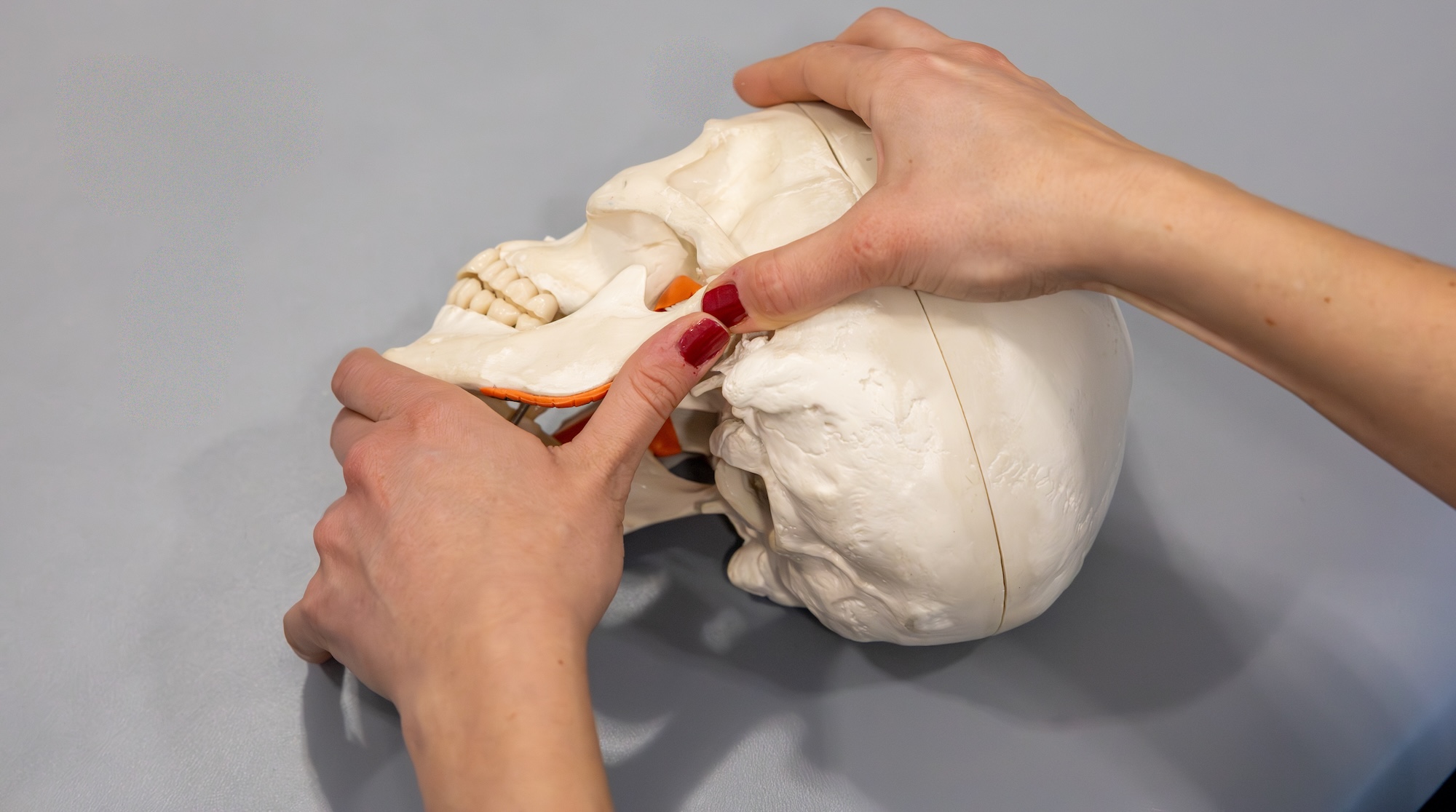
- TMJ joints (temporomandibular joints) facilitate mouth opening and closing for activities like chewing, talking, and swallowing.
- TMJ connects the lower jaw (mandible) to the skull via muscles and ligaments.
- Lower jaw’s head (condyle) fits into the temporal bone’s concavity (glenoid fossa) with an articular disc in between.
- Ligaments hold the two TMJ bones together.
- An articular disc, attached by muscles, acts as a cushion between the condyle and glenoid fossa.
- During jaw movement, the disc remains between the condyle and glenoid fossa, aiding smooth function.

Temporomandibular Disorder (TMD) is a Jaw Joint Condition Causing Pain
The jaw joint comprises a ball, socket, and cushioning disc.
- Teeth alignment issues can lead to joint displacement.
- Forward-pulled disc may cause lower jaw to move too far back, compressing nerves and blood vessels.
- Displacement can result in clicking, popping sounds, severe
pain, and permanent joint damage. - Unstable bite contributes to joint displacement and muscle
strain, leading to myofascial disorders. - Joint derangement disorders stem from dislocated jaw,
displaced disc, or injured bone. - Degenerative joint disorders result from conditions like arthritis, damaging joint cartilage.
- Any jaw movement noises or pain indicate joint problems, requiring prompt treatment.
Try This
- Normal opening: Fit three fingers between upper and lower front teeth when mouth is wide open, with minimal pain.
- Check for clicking, cracking, or grinding sensation by putting fingers inside ears and opening/closing jaw.
- Watch jaw movement in mirror; note any swinging to one side or pain.
- Slide jaw from side to side; observe for pain.
Apply pressure on jaw joint and cheek area with fingers. - If discomfort or pain is noticed, consult a dentist
specializing in jaw joint disorders.
If you notice discomfort or pain, have your jaw joint checked by
a dentist who treats patients with jaw joint disorders!

Signs of TMD

Symptoms of TMJ disorder
- Chronic recurring headaches
- Neck pain or stiffness
- Earaches, congestion, or ringing ears
- Limited jaw opening or locking
- Pain when chewing
- Dizziness and fainting
- Difficulty closing teeth together
- Pain behind the eyes
- Popping, clicking, or grating sounds in the jaw joint
- Facial pain
- Shoulder and lower back pain
- Tingling of the fingers and hands
Treatment of TMD
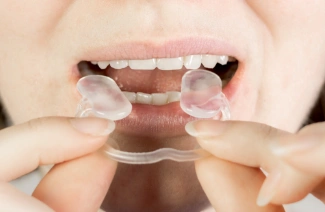
After a thorough diagnosis, personalized treatment for Temporomandibular Joint Disorder (TMD) begins, focusing on non-surgical methods. Patients receive individualized therapy, including muscle spasm reduction treatments with a comfortable dental orthotic known as a splint, which aligns the jaw properly to reduce muscle tension and promote healing.
Additional appliances like the ALF may be used to correct jaw position in three dimensions. Treatment aims to balance the bite and harmonize teeth, muscles, and joints. Various physical modalities such as and laser treatments may be employed to address muscle instability and joint inflammation.
Further Treatment
Posture assessment is crucial, with referrals to chiropractors or osteopathic practitioners if needed. Forward head posture, often associated with neck issues, can be addressed with orthodontic appliances. Some patients may require referrals to other healthcare practitioners such as chiropractors or massage therapists for muscle spasm relief.
For patients with prolonged disc displacement, prolotherapy may be necessary. Traumatic injuries like whiplash can complicate treatment, affecting the prognosis. Early treatment enhances success rates, with phase I treatment typically lasting six months but varying for each individual. Once maximum improvement is reached, patients are weaned off orthotic appliances. Further treatment may be needed if symptoms recur.